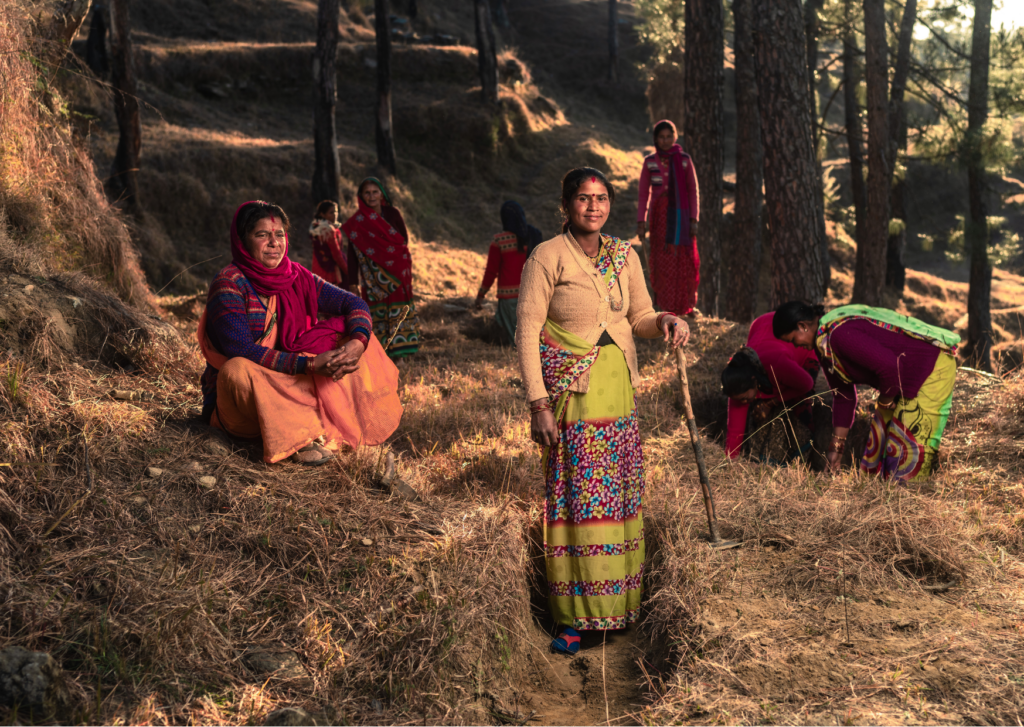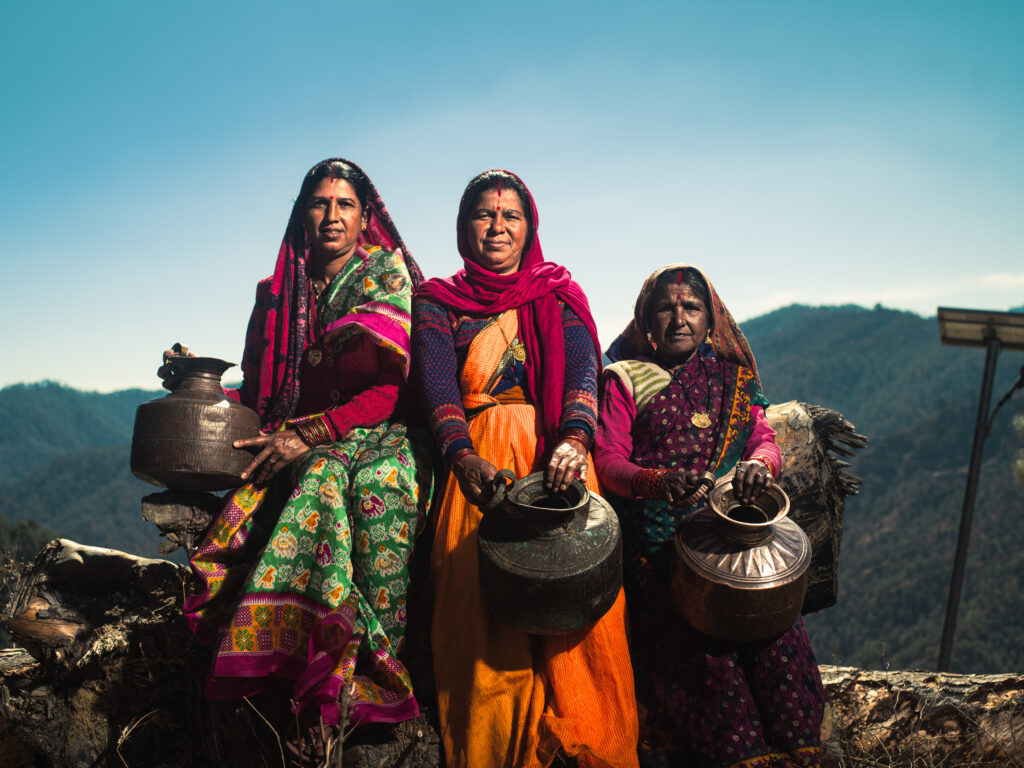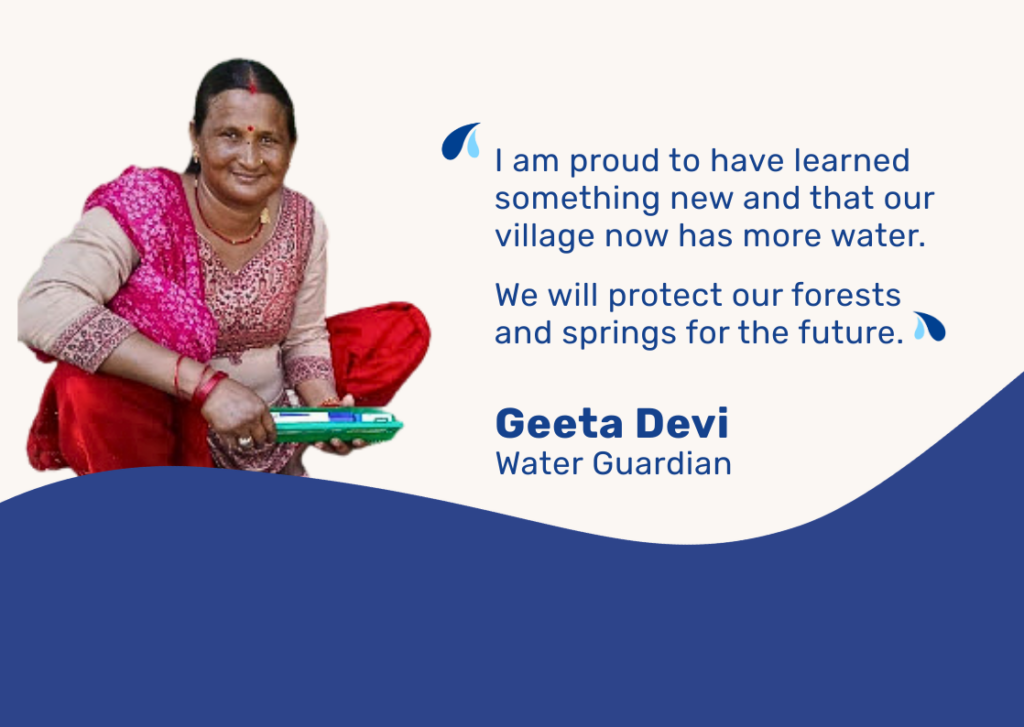
In Uttarakhand, Frank Water is working alongside mountain communities to revive drying Himalayan springs that many families depend on for drinking water, farming and daily household needs. As climate change, deforestation and changing land use patterns place increasing pressure on these fragile water sources, communities themselves are taking a leading role in protecting and restoring them. Women in particular have become central to this work, as they are often the ones most affected when springs dry up, walking long distances each day to collect water for their families.
We combine hydrogeological science with community participation and nature-based solutions to help recharge springs and strengthen long-term water security. Working with communities, we map water sources, protect recharge zones and dig contour trenches that slow rainwater runoff during the monsoon, allowing water to gradually percolate back into underground aquifers that feed the springs. To ensure these trenches are dug in the right locations and follow the natural shape of the landscape and flow of water, communities first need to identify accurate contour lines across the mountain slopes.
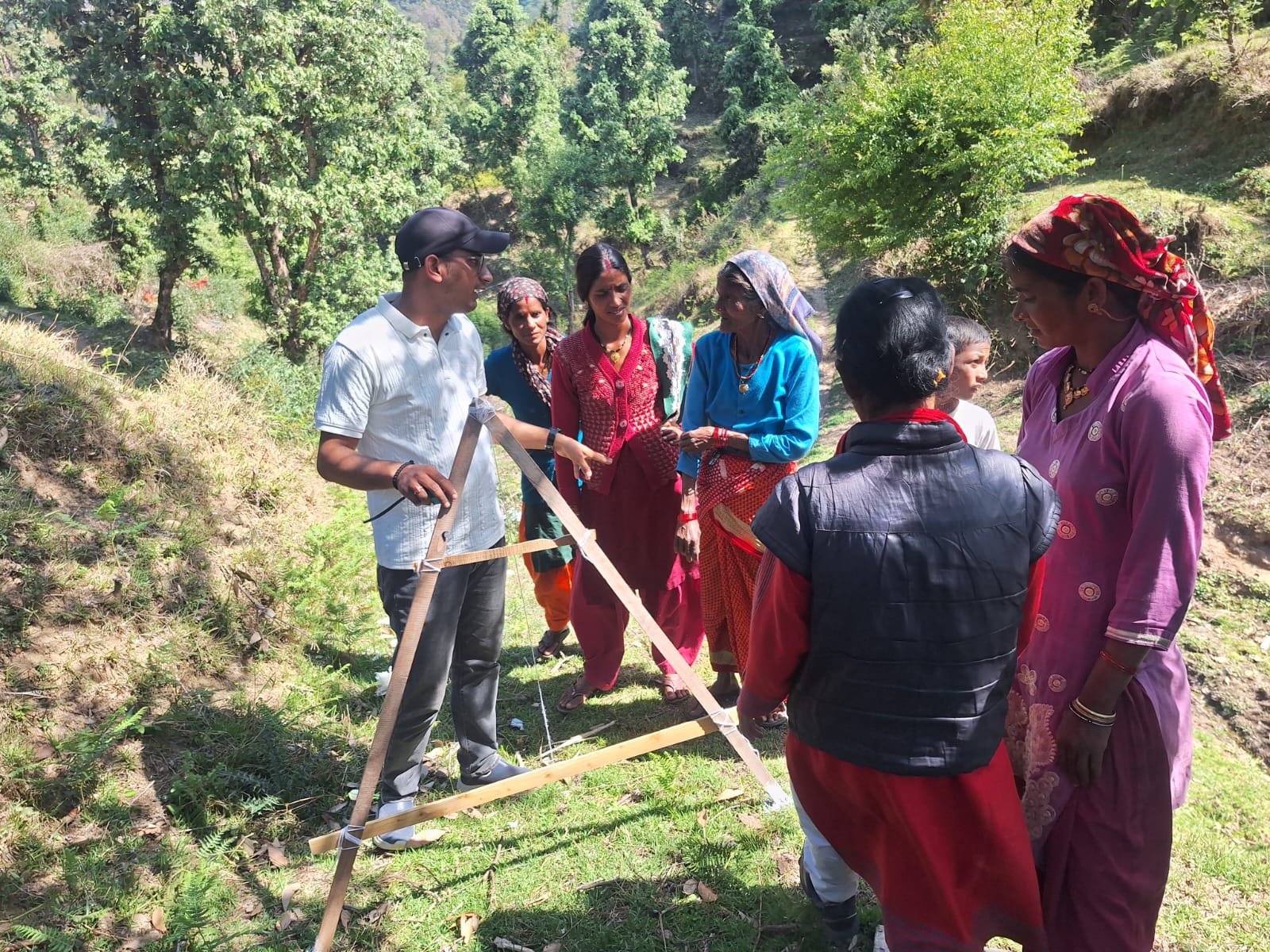
A technique our communities are using this year is the A-frame method to draw contour lines across mountain slopes before trench digging begins. Using locally available tools, communities identify the natural contours of the land so trenches can be dug to support groundwater recharge. While the A frame itself is a traditional technique long used in farming, communities are now proactively adapting it as part of spring rejuvenation efforts in the Himalayan villages. This reflects our wider approach of the programme i.e., combining local knowledge, community leadership and environmental action to build long-term water security and climate resilience.
How is an A-frame built by our communities:
An A-frame is made from three wooden or bamboo poles tied together in the shape of an ‘A’, with a string and small stone hanging from the top as a plumb line. Communities use it to identify contour lines across mountain slopes before digging trenches. By marking points at the same height along the land, trenches can be dug in the correct locations to slow rainwater runoff and help percolate underground.