Keeping it simple for water and climate
15.07.26
By subscribing to our newsletter, you give us permission to email you with news of our work and events, plus opportunities for volunteering, challenges to take part in and special offers in our shop. You can unsubscribe any time by clicking the link in our email footer.

15.07.26
Climate change, net zero, greenhouse gas, adaptation, resilience, mitigation…. climate messaging is bombarded by terms that can wash over without having much meaning for daily life.
But when you think back to school geography and the first time you encountered the term “climate”, you’ll remember how simple it is… it’s water!
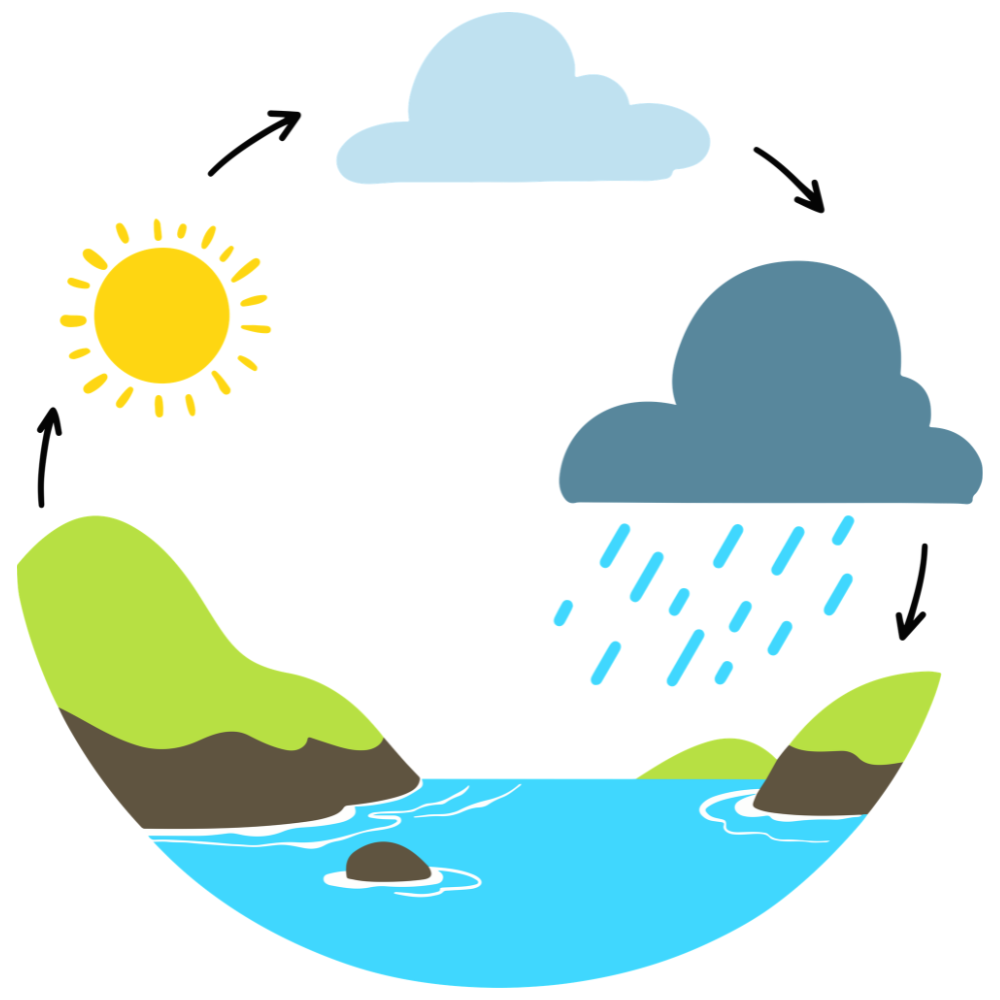
Everything we feel about our climate comes down to water. Floods and droughts are obvious water effects, but even the recent heatwaves are linked to water. Imagine how humans cool down by sweating. When the earth is dry, heatwaves occur as there’s no cooling evaporation.
Water helps to stabilise our climate and helps reduce the effects of man made climate change in lots of ways. Here’s a few examples…
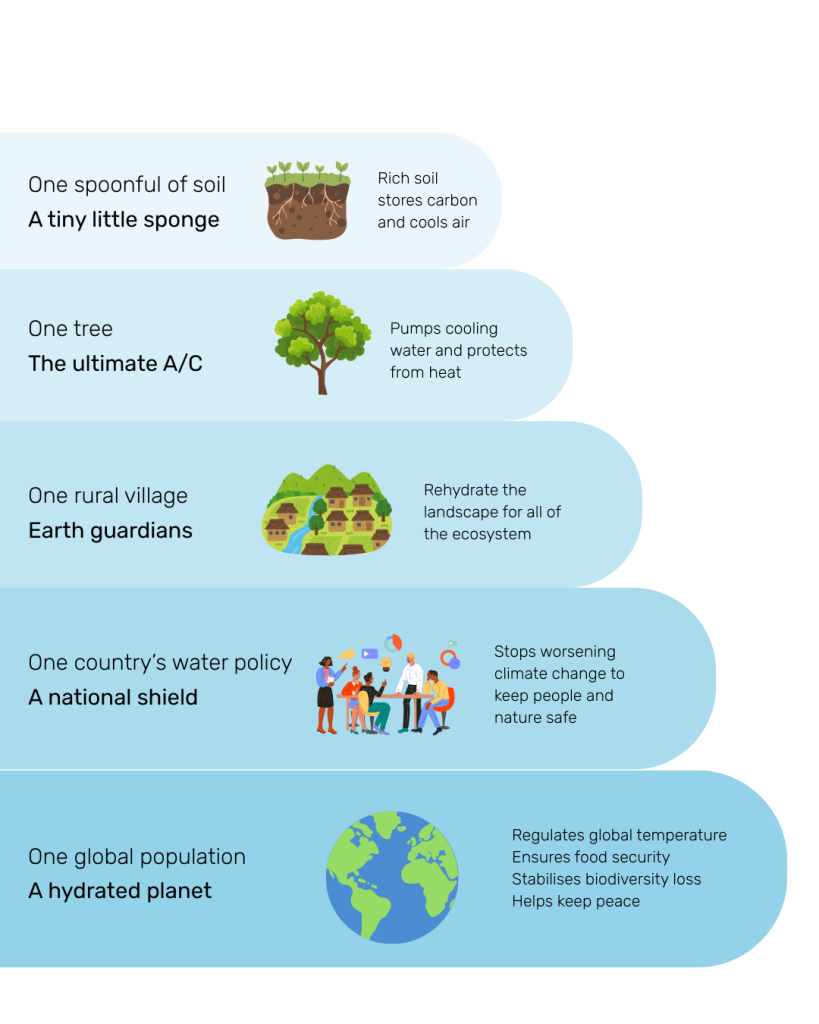
When soil has plenty of organic matter and water, it’s rich with life. A single teaspoon of rich soil contains more living organisms than there are people on Earth and is around 25% water.
Healthy soil acts like a sponge, safely storing moisture and cooling the surrounding air. But if it dries out completely, soil turns to crumbling dust, stops absorbing water, and releases its trapped carbon back into the atmosphere as a greenhouse gas. By keeping soil hydrated with natural rainwater harvesting trenches that allow water to slowly percolate, we protect a massive carbon-store and disaster protection force under our feet.
An adult tree pumps hundreds of litres of water from the ground up into the sky every single day through its leaves.
On a blazing hot day, a single large tree provides the same cooling effect as ten room-sized air conditioners running non-stop. When trees have enough fresh water, they physically cool down entire communities, protecting them from the worst of the heat.
For communities in many parts of the world, water availability is the thin line between struggling or striving.
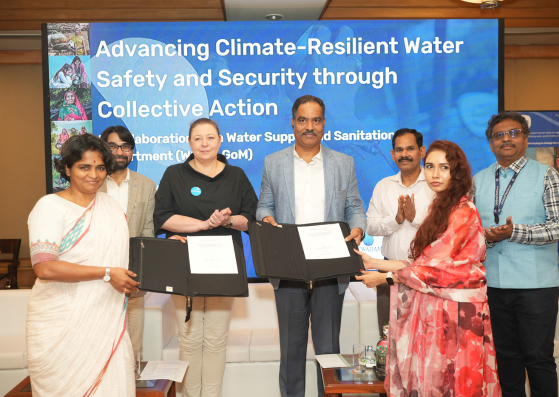
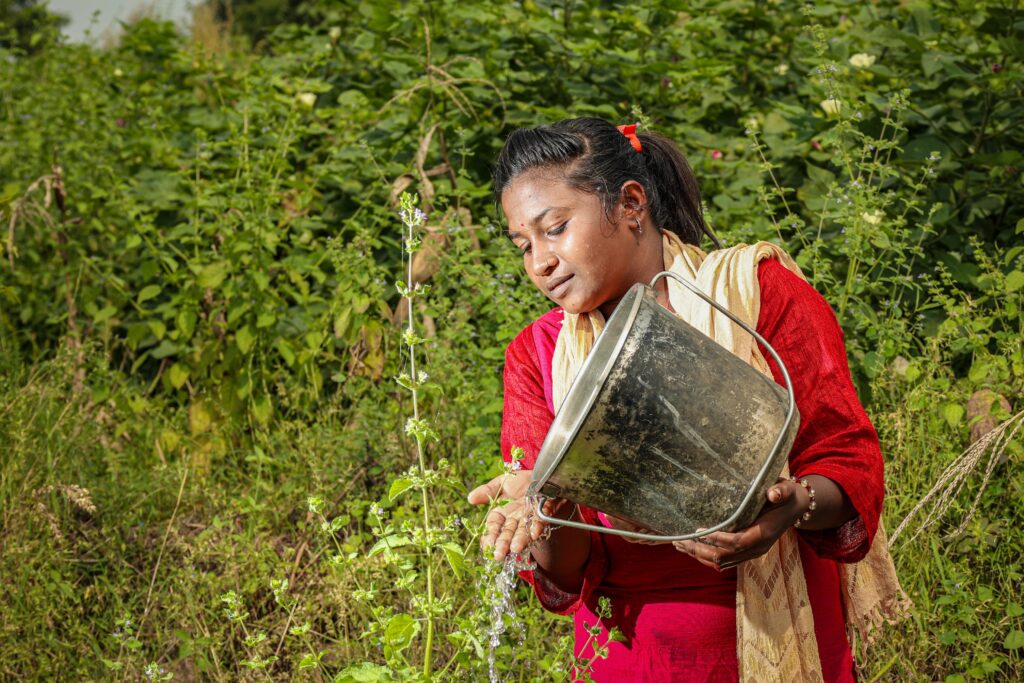
When a village works together to restore and protect their water, it creates resilience for the nearby land and all its nature, not just human life. Instead of monsoon rains running off the land and causing natural disasters like floods and landslides, the landscape safely holds the water. In the summer months that stored water keeps taps flowing, local crops growing and cools the local air.
When a government designs its water policy, a large part of decision making is choosing its strategy for mitigation (preventing worse climate change) and safety.
If a country treats water as something to manage using pipes and pumps, it invites worse floods and hotter heatwaves. But if its policy focuses on capturing rainwater, cleaning rivers, and keeping landscapes hydrated, it creates a national shield.
Good water policy means a country can hit its climate targets simply by letting nature do what it does best.
Zoom out to the eight billion of us living on this planet. Every climate goal comes down to how we value and nurture water from securing enough food to preventing displacement of people and the conflicts that causes.
When we protect our shared water, we are actively fighting back. A hydrated planet grows more plants to suck up carbon, suffers fewer heatwaves, and keeps global temperatures more stable.

You need to load content from reCAPTCHA to submit the form. Please note that doing so will share data with third-party providers.
More Information