
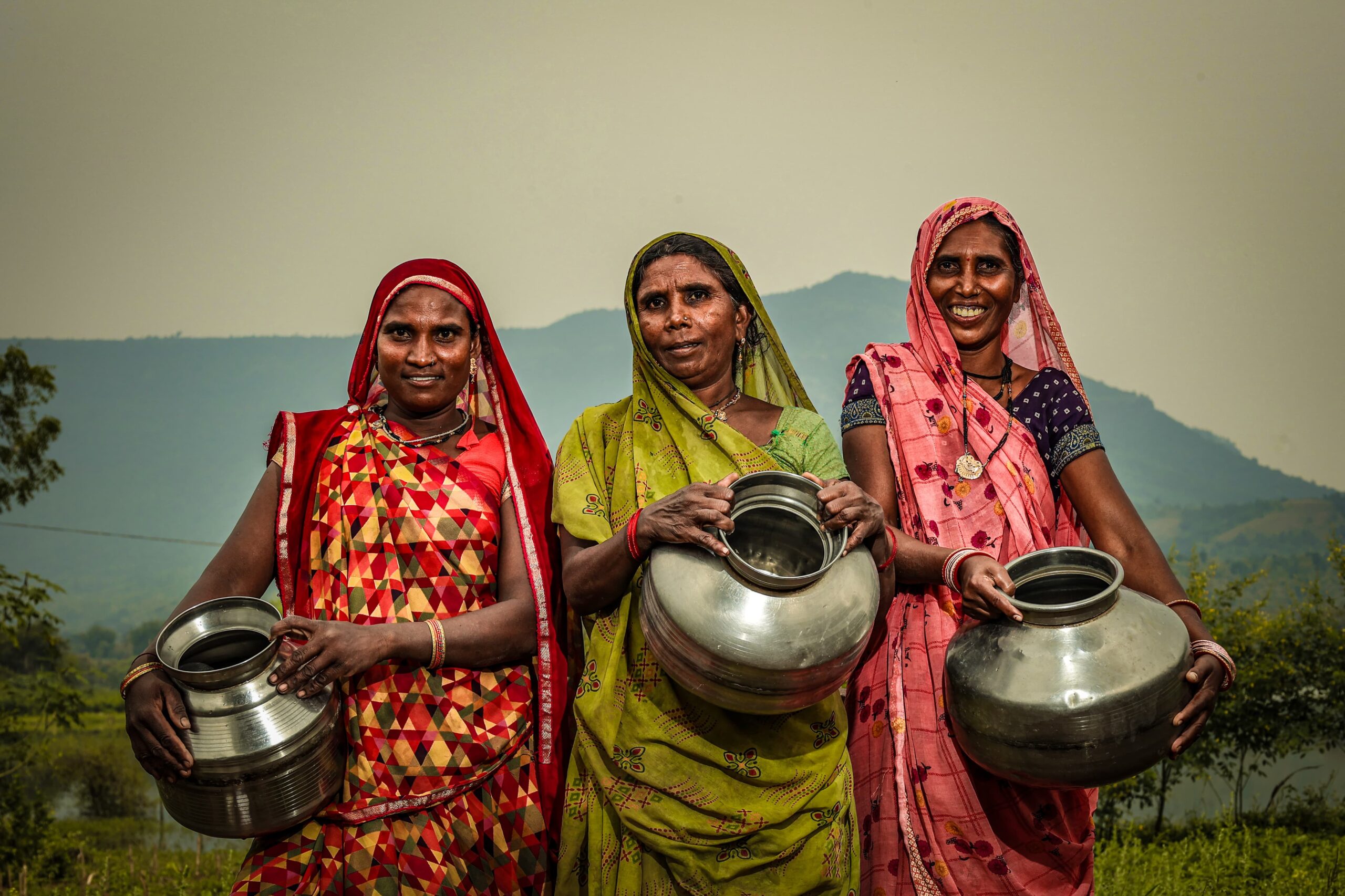
Walking and waiting for water, carrying water and caring for family members sick from drinking unsafe water are all chores that women and girls face daily all over the world.
The time taken to complete these chores means there is no time to earn a decent living, go to school or even to rest and socialise. Geeta Devi, who worked with Frank Water in 2025 told us “I grew up watching the women around me prioritising water collection over rest, health, and personal aspirations. From early morning to late evening, women’s schedules revolved around the availability of water. I saw that this collective struggle created silent physical exhaustion and emotional stress, yet it was rarely discussed as a problem that could be solved. Water scarcity was accepted as fate rather than a condition that could be improved.”
A UNICEF study of the time women and girls spend fetching water revealed a total of 200 million hours every day, which UNICEF describes as a “a colossal waste of time.” More than a quarter of our planet’s female population are without clean water at home. For many people, the closest source of water that’s safe for cooking, drinking, and hygiene is at least 30 minutes’ walk away, and it’s a trip that needs to be made several times each day to collect enough water for all of the family’s domestic needs.
Here are some of the reasons that water is a women’s issue, and one that needs to be addressed urgently.
Lack of access to water limits opportunities for girls and women
The duties of collecting water can mean there’s no time for school for children. Lack of water and toilets in school means that girls drop out of education at an alarming rate when they start their periods too. Spending up to six hours every day means that there’s little time left for earning money, learning or simply resting and enjoying time with the family. For women, this deepens gender inequality and leads to a cycle of poverty, exhaustion and stress.
Life without nearby water or a decent toilet is risky
Travelling long distances, or using isolated water points and open air toilets increases women and girls’ exposure to potential harassment, physical danger and animal attacks. In a BBC News Article “India’s long, dark and dangerous walk to the toilet” a village near Delhi was visited, where the fields are the only toilet most of the female villagers have ever known and they regularly experience harassment and molestation so head out in groups for safety. There are also risks of animal attacks. In the state of Uttarakhand, where some of Frank Water’s work takes place, there were 71 bear attacks on women last year alone.
Carrying water is painfully hard, and especially dangerous for pregnant women and girls
Collecting water is a brutal task. Like with any repeated lifting of heavy objects, women often experience pain in the neck, back, and hips. There are also very real risks of slips and falls whilst carrying heavy water vessels on rocky, steep paths. Pregnant women are especially at risk of injury and pregnancy complications. Girls, without the strength to lift full cans safely, experience lifelong health issues.
Women aren’t given a say in how water is shared
In many regions of the Global South, women shoulder the primary responsibility for collecting and managing household water, yet they remain excluded from village-level decision-making. By helping women to stand up and be heard they become water guardians and community leaders.

“The global water crisis affects everyone, but it does not affect them equally. When women are excluded from water decisions, services are less sustainable. By putting water management back into the hands of the women who use it most, we don’t just provide a drink of water, we provide the foundation for equality, safety, and economic freedom.”
Jon Shepherd, Co-CEO of Frank Water
Here’s how Frank Water’s work helps to tackle the inequalities of water use in parts of the world where resources are stretched:
Strengthening women’s agency: our work builds women-led water governance. We deliver hygiene and menstrual health education and provide training in water safety, testing, and conservation.
Championing women’s rights: by establishing women-led water committees. In the regions we work in, women are the primary water collectors but have historically had little input in water governance. Through leadership training, we enable women to take charge of water management.
Prioritising safety and privacy for women and girls: through our work in sanitation and hygiene.
Eradicating waterborne disease: by helping women to understand which health problems they and their children are experiencing are caused by water contamination and providing access to safe drinking water.